
Overview
A few days ago, Anthropic released its most anticipated model, Fable (notable especially from a security standpoint), which is said to have capabilities comparable to Mythos. Within 48 to 72 hours of the release, Anthropic cut off access to those latest models outside the United States, following a request from US regulators in what amounted to a regulatory halt.
A simple service interruption or regulatory pause (such as Anthropic restricting access to its latest frontier models outside the United States) should serve as a glaring alarm for the global community.
For enterprises and small-to-mid-scale economies that increasingly rely on artificial intelligence to drive productivity and innovation, the message is clear: businesses cannot build resilient futures on proprietary infrastructure controlled by foreign tech giants subject to unpredictable regulatory and sovereign whims.
The solution is no longer a distant theoretical exercise. Artificial intelligence, particularly Large Language Models (LLMs), is no longer a secret magic wand wielded only by a select few Silicon Valley corporations. The underlying architecture is understood, and open-source is the only sustainable way to break out of this cycle of dependency and irrational sovereign behavior.
The Fragility of Reliance on Proprietary AI
When a regional bloc or an entire continent loses access to a vital tool overnight, the dependency is structural — and it must be treated as such.
Currently, the generative AI landscape is heavily skewed. When a regional bloc or an entire continent loses access to a vital tool overnight due to compliance fears, geopolitical friction, or arbitrary corporate strategy, local businesses suffer immediately. European startups find themselves unable to deploy software, customer service automations break, and data analytics pipelines stall.
The Data on AI Dependency and Cost
The numbers confirm what the incident made visible: structural reliance on foreign private infrastructure is not a future risk — it is the current reality.
- Market Dominance & Adoption: The Stanford AI Index 2026 emphasizes that industry continues to drive the field, producing over 90% of notable frontier models. Furthermore, the United States still produces more top-tier AI models and higher-impact patents globally, reinforcing global structural reliance on American private infrastructure despite narrowing performance gaps.
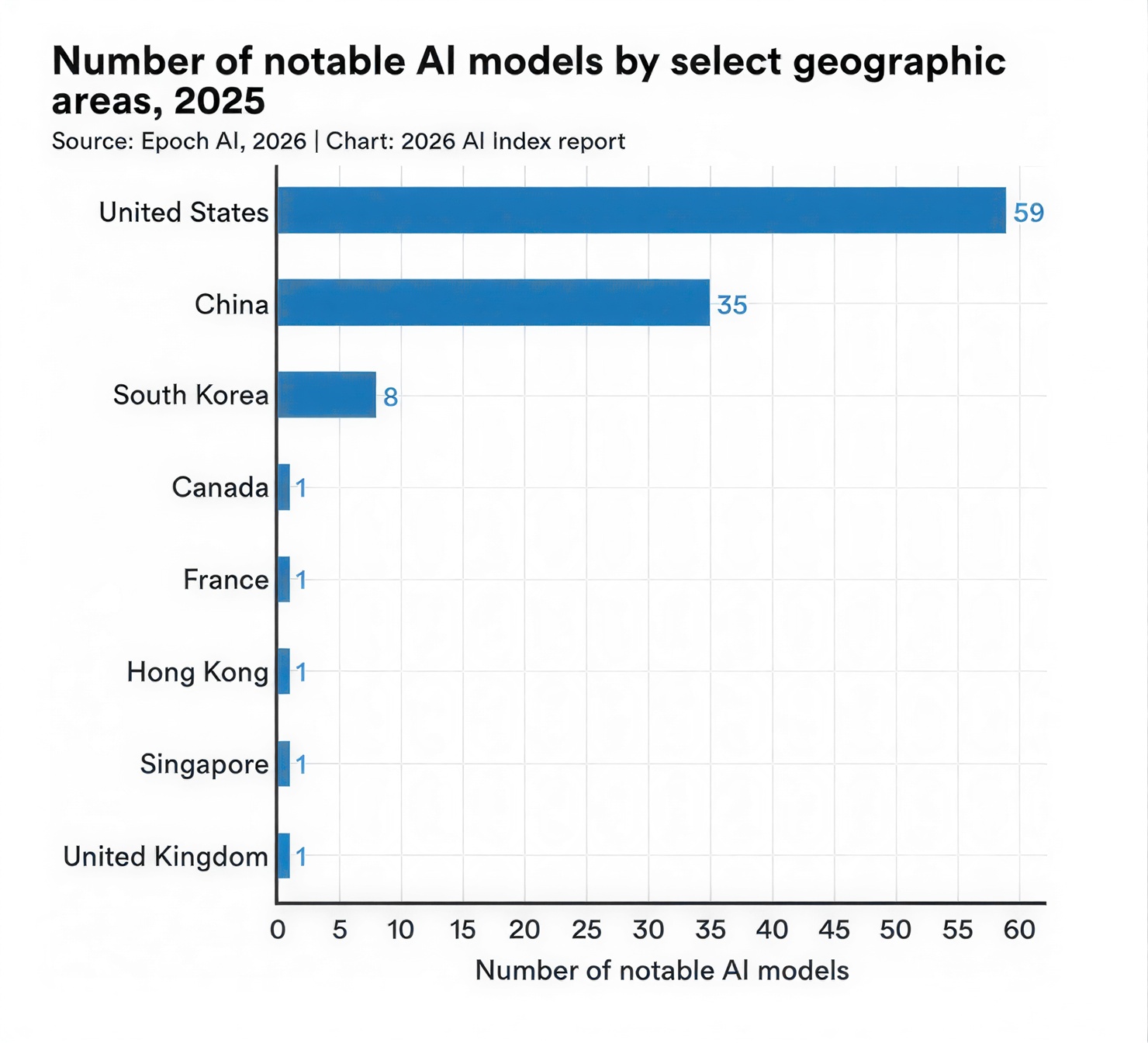
- Vendor Lock-in Risk: The UK Competition and Markets Authority (CMA) report emphasizes that controlling key inputs for foundation models can lead to severe market concentration and dangerous vendor lock-in for organizations heavily invested in cloud AI.
- The Cost Shift: Parameter-efficient fine-tuning methods like LoRA have been proven to drastically reduce the number of trainable parameters by up to 10,000× and GPU memory requirements by 3× compared to full fine-tuning. This allows businesses to securely fine-tune open-source models at a fraction of the cost of building from scratch.
A Two-Pronged Strategy for Technological Sovereignty
Governments cannot simply regulate their way to technological independence. A parallel, aggressive strategy is required.
Governments must realize that they cannot simply regulate their way to technological independence. While the EU AI Act provides a regulatory framework, it does not write code or provision compute. Instead, a parallel, aggressive strategy is required:
1. The Open-Source Expressway
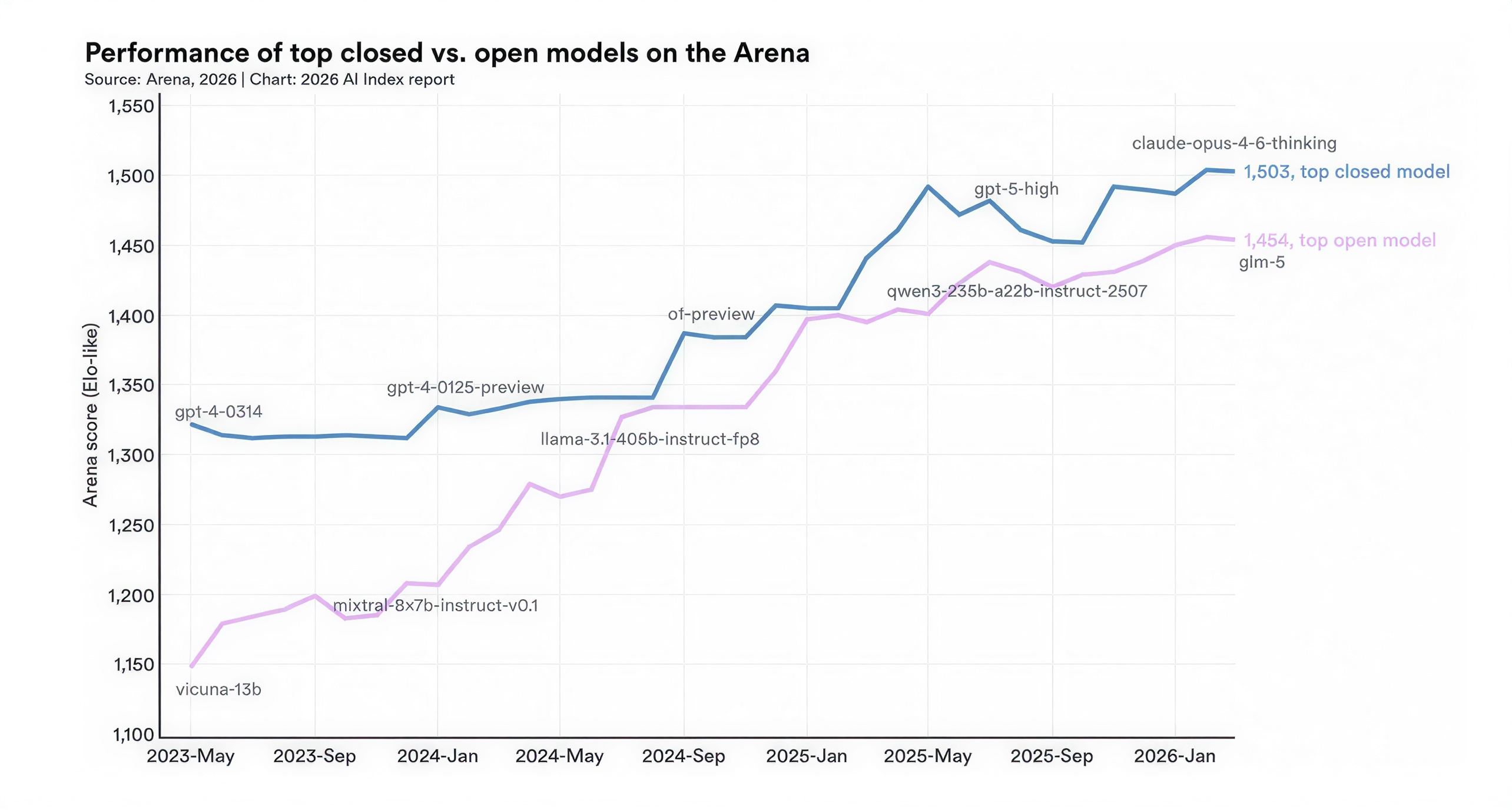
Governments should actively incentivize and mandate the use of open-source and open-weight models within public sectors and heavily regulated industries. By embracing models where the weights and architectures are available, businesses can host their AI locally, ensuring absolute data privacy and immunity from foreign geoblocking. Open-source models currently perform within a few percentage points of proprietary frontier models on standard benchmarks.
2. Sovereign Regional Capabilities
While open-source provides the foundation, governments must simultaneously invest heavily in regional AI capabilities. This means subsidizing sovereign compute clusters (data centers governed by local laws) and funding the creation of regional LLMs trained heavily on local languages, cultural contexts, and sovereign data repositories that US companies cannot easily access.
The Nordic Vanguard: Sweden and Norway
If mid-scale European economies are to survive this technological shift, they need champions.
If mid-scale European economies are to survive this technological shift, they need champions. Sweden and Norway are uniquely positioned to embark on this journey on behalf of the broader European ecosystem.
Why the Nordics? The region possesses a critical structural advantage in the AI arms race: Energy and Infrastructure. AI model training and inference require massive amounts of electricity. Norway and Sweden boast some of the world's most stable, greenest power grids, powered largely by hydroelectric and wind energy.
The Nordic Advantage in Numbers
- Green Compute: The International Energy Agency (IEA) highlights that data centers in regions with abundant renewable energy can operate with significantly lower carbon footprints and assist grid stability during the transition to clean energy.
- Cooling Efficiency: The European Commission notes that data center cooling accounts for a major portion of facility energy consumption. Locating data centers in colder Nordic climates naturally reduces reliance on energy-intensive artificial cooling methods, dramatically lowering the Power Usage Effectiveness (PUE).
Furthermore, these nations benefit from high levels of societal trust, robust data privacy frameworks, and incredibly digitally literate populations. By pooling their financial and infrastructural resources, Sweden and Norway could create a shared "Nordic-Euro AI Compute Trust." This trust could host massive open-source model repositories and provide subsidized compute power for European startups, ensuring that the next great AI innovation is born in Stockholm or Oslo, rather than San Francisco.
Conclusion
The era of treating generative AI as an imported luxury is over. When foreign corporations hold the keys to fundamental business infrastructure, sovereignty is lost. It is time to demystify the technology. By deeply integrating open-source frameworks and tasking tech-forward, energy-rich nations like Sweden and Norway with leading regional AI development, Europe can reclaim its digital independence and build an AI ecosystem that is resilient, equitable, and locally controlled.
References
- Stanford Institute for Human-Centered Artificial Intelligence (HAI). (2026). Artificial Intelligence Index Report 2026. Available at: https://aiindex.stanford.edu/report/
- UK Competition and Markets Authority. (2024). AI Foundation Models: Update Paper. Available at: https://www.gov.uk/government/publications/ai-foundation-models-update-paper
- Hu, E. J., Shen, Y., Wallis, P., Allen-Zhu, Z., Li, Y., Wang, S., Wang, L., & Chen, W. (2021). LoRA: Low-Rank Adaptation of Large Language Models. arXiv. Available at: https://arxiv.org/abs/2106.09685
- International Energy Agency (IEA). (2024). Data Centres and Data Transmission Networks. Available at: https://www.iea.org/energy-system/buildings/data-centres-and-data-transmission-networks
- European Commission. (2020). Energy-efficient Cloud Computing Technologies and Policies for an Eco-friendly Cloud Market. Available at: https://digital-strategy.ec.europa.eu/en/library/energy-efficient-cloud-computing-technologies-and-policies-eco-friendly-cloud-market